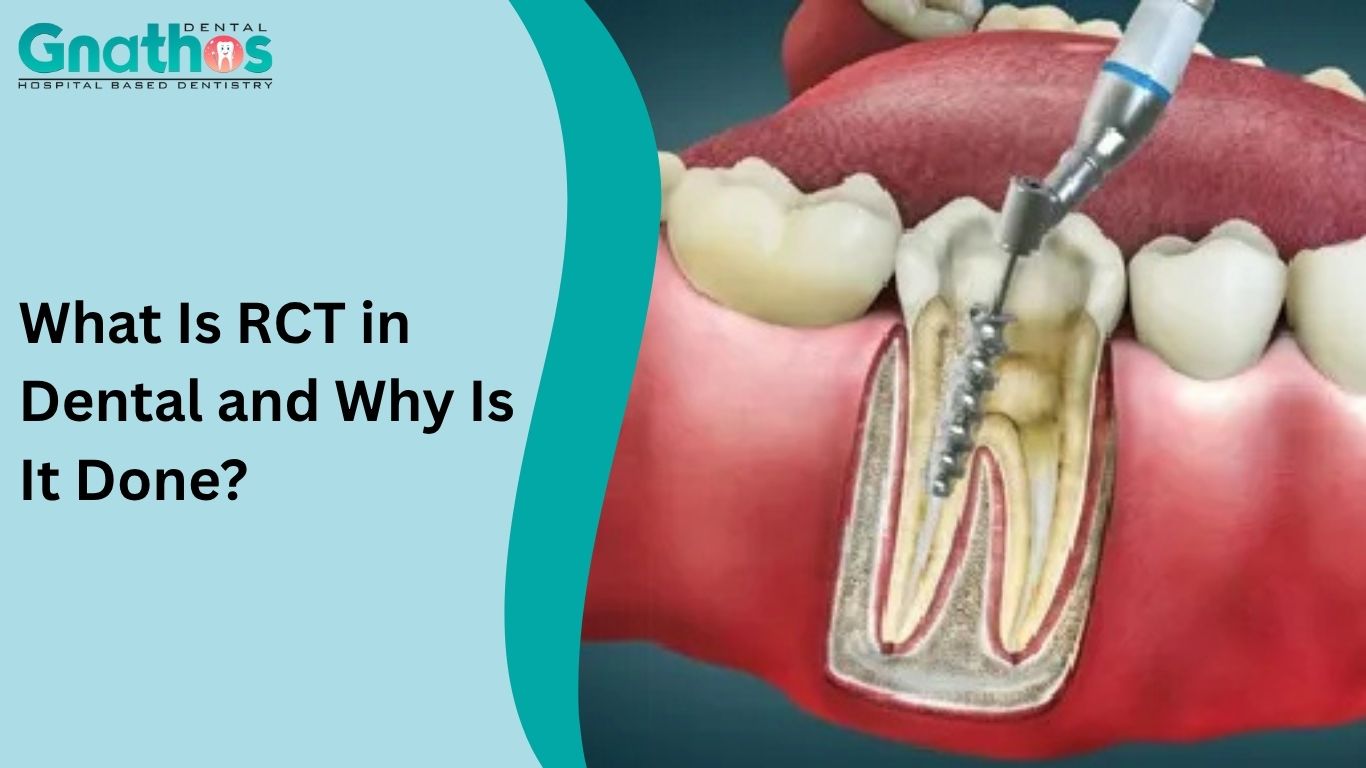
Ever heard the term “RCT” at the dentist’s office and felt a little lost? It might sound like some complicated technical jargon, but it’s actually just an abbreviation for one of the most common and effective dental procedures: Root Canal Treatment. So, let’s dive into What Is RCT in Dental and why it’s a superhero procedure for saving a damaged tooth. This isn’t just a clinical explanation; we’ll talk about what it means for you and your smile.
Understanding the “Why”: The Anatomy of a Tooth
To truly grasp What Is RCT in Dental, we need to understand the inner workings of a tooth. It’s not just a hard shell; it’s a living organ. The part you see above the gum line is the crown, and the part embedded in the jawbone is the root. Inside both the crown and the root is a hollow space called the pulp chamber. This chamber contains the dental pulp, a soft tissue composed of nerves, blood vessels, and connective tissue. This pulp is crucial for the tooth’s development, but once a tooth is fully mature, it can survive without the pulp.
The pulp can become infected or inflamed due to several reasons, including:
- Deep Decay: A cavity that progresses too far and reaches the pulp.
- Cracked or Chipped Tooth: A fracture in the tooth that allows bacteria to enter.
- Trauma: An injury to the tooth, like a sports accident, that can damage the pulp even if there’s no visible crack.
- Repeated Dental Procedures: Multiple fillings or other treatments on the same tooth can eventually irritate the pulp.
When the pulp gets infected, it can be incredibly painful. The nerves inside the tooth swell and cause pressure, leading to the infamous “toothache.” If left untreated, the infection can spread to the jawbone, forming an abscess and potentially leading to more serious health issues. This is where Root Canal Treatment in Hyderabad becomes essential.
What is RCT in Dental and How is It Done?
RCT, or Root Canal Treatment, is a dental procedure designed to save a tooth that has a severely infected or damaged pulp. The goal is to clean out the infection, seal the tooth, and restore its function. The procedure, when performed by a skilled professional, is a highly successful way to preserve a natural tooth that would otherwise need to be extracted. It’s not a painful process; in fact, it’s what relieves the pain.
The typical steps of a root canal procedure include:
- Diagnosis and Anesthesia: Your dentist, like Dr. Suresh PL, will first take an X-ray to determine the extent of the infection and the shape of the root canals. Then, they will numb the area with a local anesthetic to ensure you are completely comfortable throughout the procedure.
- Accessing the Pulp: A small opening is made in the crown of the tooth to access the pulp chamber. This allows the dentist to reach the infected pulp and root canals.
- Cleaning and Shaping: Using tiny, specialized instruments, the infected pulp is removed from the chamber and the canals. The canals are then meticulously cleaned, disinfected, and shaped to prepare them for filling. Think of it like a thorough spring cleaning for the inside of your tooth.
- Filling and Sealing: Once the canals are completely clean and dry, they are filled with a biocompatible material, usually a rubber-like substance called gutta-percha. A special adhesive cement is used to seal the canals, preventing future bacterial contamination.
- Restoration: After the canals are sealed, a temporary filling is placed to protect the tooth. In a subsequent visit, the temporary filling is removed and a permanent restoration, often a dental crown, is placed. This is a critical step because a tooth that has undergone RCT becomes more brittle and susceptible to fracture. A crown provides the necessary strength and protection.
This multi-step process is what makes Root Canal Treatment in Hyderabad so effective. It’s a precise and detailed procedure that requires expertise and a sterile environment to ensure success.
The Pain Myth: It’s Not the RCT, It’s the Infection
One of the biggest fears surrounding What Is RCT in Dental is the myth that it’s a painful procedure. The reality is that the pain you associate with a root canal is actually the pain from the infection itself. The procedure is what relieves that pain. With modern anesthesia and technology, a root canal is no more uncomfortable than getting a filling. So, if you’re experiencing a severe toothache, don’t delay treatment out of fear. A root canal is your ticket to relief.
The Role of a Dental Professional
Choosing the right professional is critical for a successful Root Canal Treatment in Hyderabad. A skilled endodontist (a dentist specializing in root canals) or an experienced general dentist will use the latest technology, like digital X-rays and microscopes, to ensure a thorough and precise procedure. They can accurately diagnose the problem, navigate the complex anatomy of the root canals, and provide a durable and long-lasting result. A good dentist will also take the time to explain every step, address your concerns, and make sure you feel at ease. Professionals like Dr. Suresh PL are dedicated to providing excellent care and ensuring the best possible outcome for their patients.
Conclusion
In a nutshell, What Is RCT in Dental? It’s the process of saving a tooth from severe infection or damage. By carefully removing the infected pulp, cleaning and sealing the root canals, and then restoring the tooth with a crown, Root Canal Treatment in Hyderabad allows you to keep your natural tooth and all its functions. It is not a procedure to be feared, but rather embraced as a fantastic solution that can save your smile and prevent future complications. The key is to seek professional help early and not delay treatment. For expert care and a gentle approach, professionals like Dr. Suresh PL can provide the guidance and treatment you need.
Frequently Asked Questions:
Q1: Is a root canal treatment painful?
No, the procedure itself is not painful. Local anesthesia is used to completely numb the area, so you will only feel pressure and movement, not pain. The procedure is what relieves the intense pain caused by the infected tooth.
Q2: How long does a root canal last?
With proper care and a good final restoration (like a crown), a tooth treated with RCT can last a lifetime. Regular check-ups and good oral hygiene are key to its longevity.
Q3: Do all teeth with deep decay need a root canal?
Not necessarily. A regular cavity can be treated with a simple filling. A root canal is only needed when the decay has progressed deep enough to infect the pulp.
Q4: Which is better, RCT or filling?
Whether RCT or filling is better depends on the tooth’s condition. A filling is ideal for minor decay, while RCT (Root Canal Treatment) is needed when infection reaches the pulp. RCT saves a severely damaged tooth that a filling alone cannot restore.
Q5: Is crown necessary for RCT?
Yes, a crown is usually necessary after RCT because the treated tooth becomes weaker and more prone to fracture. A dental crown restores strength, shape, and function, protecting the tooth from further damage and ensuring long-term durability after root canal treatment.