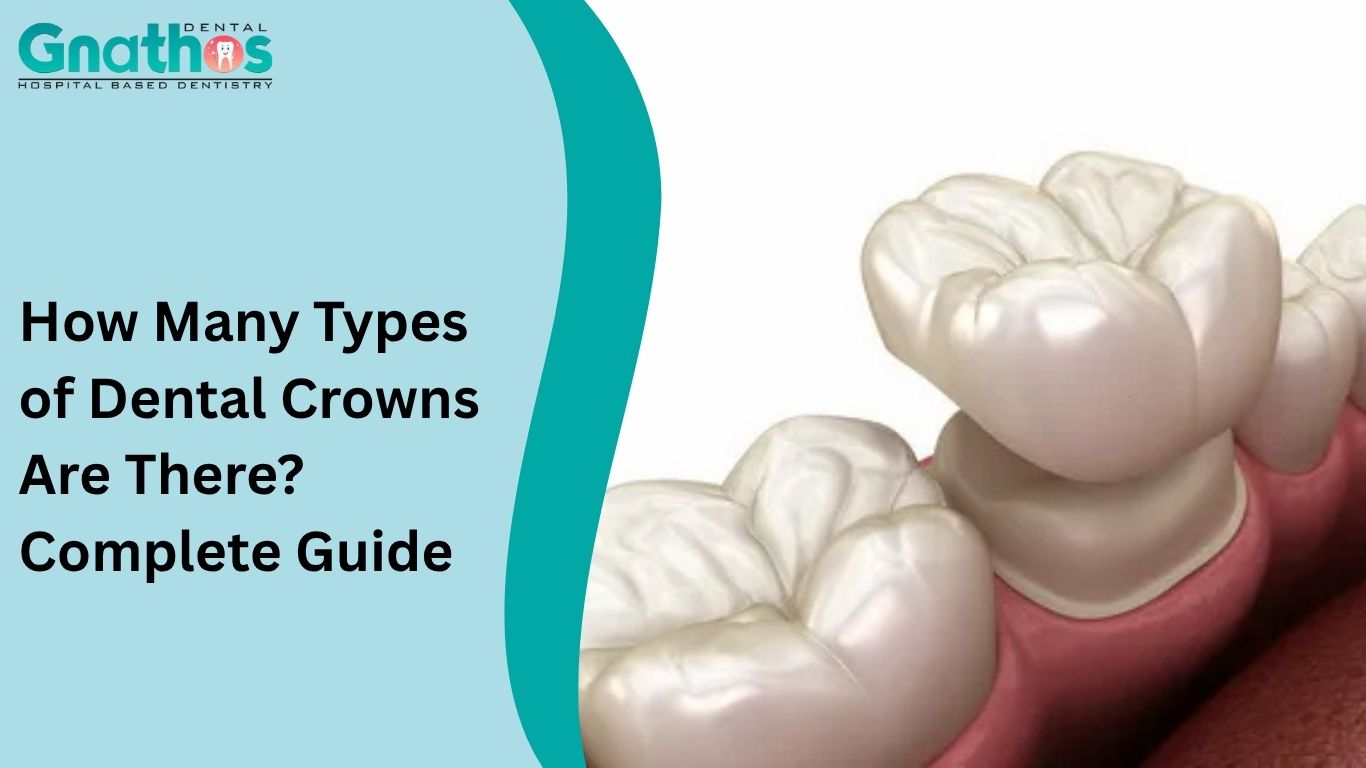
Have you ever had a dentist tell you that you need a “crown” and immediately pictured a tiny, royal headpiece for your tooth? You wouldn’t be the first! Dental crowns are one of the workhorses of restorative dentistry—a solution that can save a severely damaged tooth and restore your smile. But when it comes to crowns, it’s definitely not a one-size-fits-all scenario.
If you’re facing a decision about getting a crown, you’re probably asking yourself, “How Many Types of Dental Crowns Are There?” It’s a great question, and the answer involves understanding different materials, their unique benefits, and which one is the perfect fit for your specific dental needs and lifestyle. Let’s embark on a complete guide to understanding the various Types of Dental Crowns and what each option means for the future of your smile.
What Exactly Is a Dental Crown?
Before we explore the Types of Dental Crowns, let’s clarify their purpose. A dental crown is essentially a custom-made, tooth-shaped cap that is placed over a damaged, weak, or severely decayed tooth. Think of it as a protective helmet that completely encases the entire visible portion of the tooth above the gum line.
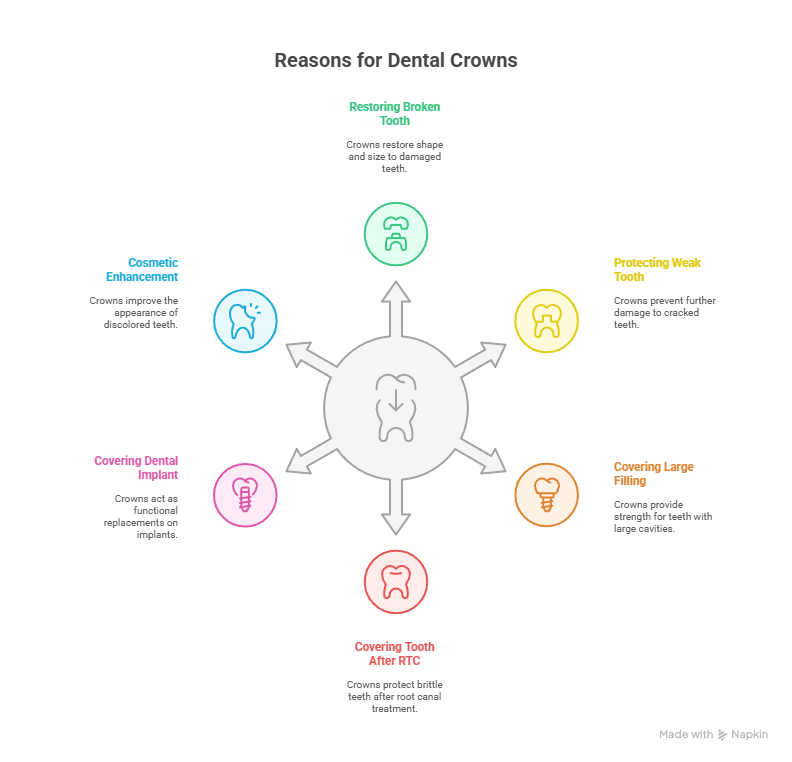
A crown is necessary for several key reasons:
- Restoring a Broken or Worn Tooth: It can bring a severely damaged tooth back to its original shape and size.
- Protecting a Weak Tooth: It holds parts of a cracked or weak tooth together, preventing further fracture.
- Covering a Large Filling: If a cavity is too large for a standard filling, a crown provides the necessary strength.
- Covering a Tooth After RTC (Root Canal Treatment): Teeth that have had a root canal often become brittle, and a crown is essential to prevent them from breaking.
- Covering a Dental Implant: Crowns are placed on top of dental implants to act as the functional, visible tooth replacement.
- Cosmetic Enhancement: They can be used to cover severely discolored or poorly shaped teeth.
The choice of material is critical because it determines the crown’s durability, appearance, and suitability for the tooth’s location in your mouth. This is why knowing the different Types of Dental Crowns is so important.
The Major Types of Dental Crowns: A Material Breakdown
Dental crowns are typically categorized based on the material they are made from. Each material offers a different balance of strength, aesthetics, and cost. Here is a detailed look at the primary Types of Dental Crowns:
1. All-Ceramic or All-Porcelain Crowns
- What they are: These crowns are made entirely from ceramic or porcelain, offering the most natural look.
- Advantages:
- Supreme Aesthetics: They are unparalleled in their ability to mimic the light-reflecting properties of natural tooth enamel. They are virtually indistinguishable from real teeth.
- Biocompatible: They are metal-free, making them an excellent choice for patients with metal allergies.
- Excellent for Front Teeth: Because of their high aesthetic quality, they are the preferred choice for visible front teeth.
- Disadvantages:
- Less Strength: While modern ceramics are quite strong, traditional porcelain can be more prone to chipping or breaking than metal or zirconia in areas of high biting force.
- Wear on Opposing Teeth: If the porcelain isn’t perfectly polished, it can cause wear on the natural teeth it bites against.
- Best For: Front teeth and highly visible areas where aesthetics are the primary concern.
2. Porcelain-Fused-to-Metal (PFM) Crowns
- What they are: PFM crowns have a metal alloy base (the substructure) for strength, with a layer of porcelain fused over the top for a tooth-colored appearance.
- Advantages:
- Good Aesthetics and Strength: They offer a great combination of the durability of metal and the look of porcelain. They are stronger than all-ceramic crowns, making them suitable for back teeth.
- Cost-Effective: They are often less expensive than all-ceramic or all-zirconia options.
- Disadvantages:
- The “Black Line”: Over time, or as gums recede, the metal margin near the gumline can become visible as a thin, dark line, which is a significant aesthetic drawback.
- Less Natural Look: They lack the natural translucency of all-ceramic crowns.
- Best For: Back teeth (molars and premolars) where high biting force is common, but some level of aesthetics is still desired.
3. All-Metal Crowns (Gold Alloys or Base Metal Alloys)
- What they are: These crowns are made entirely of metal alloys, often gold (which is typically a mix of gold, copper, and other metals) or a base-metal alloy (like nickel or chromium).
- Advantages:
- Exceptional Strength and Durability: They are the toughest of all the Types of Dental Crowns and are extremely resistant to fracture or wear.
- Minimal Tooth Reduction: They require the least amount of healthy tooth structure to be removed for placement.
- Longevity: They rarely chip and last a very long time.
- Disadvantages:
- Poor Aesthetics: The metal color is a major drawback for visible teeth.
- Thermal Conductivity: They can sometimes be more sensitive to temperature changes than other materials.
- Best For: Back molars where the bite force is immense and aesthetics are not a concern. Gold is often preferred for its biocompatibility and gentle wear on opposing natural teeth.
4. Zirconia Crowns
- What they are: Zirconia (zirconium dioxide) is a white, powdered metal oxide. It is an extremely hard ceramic material that has become incredibly popular in dentistry.
- Advantages:
- Incredible Strength: Zirconia is nearly as strong as metal, making it virtually indestructible and perfect for back teeth.
- Good to Excellent Aesthetics: Monolithic (solid) zirconia is very strong but less translucent. High-translucency zirconia offers excellent aesthetics, approaching that of all-ceramic, making it suitable for front teeth as well.
- Biocompatible: It is metal-free and rarely causes allergic reactions.
- Disadvantages:
- Hardness: Its extreme hardness can sometimes cause wear on the opposing teeth, though modern, highly polished zirconia has largely mitigated this concern.
- Can Be Opaque: Older, monolithic zirconia could sometimes look too opaque or blocky.
- Best For: A highly versatile crown, ideal for both front and back teeth, especially when maximum strength and reasonable aesthetics are required. It’s often seen as a superior modern alternative to PFM.
5. E-Max Crowns (Lithium Disilicate)
- What they are: E-Max is a brand name for a type of all-ceramic crown made from lithium disilicate glass-ceramic.
- Advantages:
- Superior Aesthetics: It offers excellent translucency and light-scattering properties, making it arguably the most beautiful and lifelike crown material available.
- Good Strength: It is stronger than traditional porcelain and is durable enough for most teeth, including premolars and sometimes molars.
- Disadvantages:
- Not as Strong as Zirconia or Metal: While strong, it is still more prone to fracture under extreme pressure compared to zirconia or metal.
- Best For: Anterior (front) teeth and bicuspids (premolars) where the natural look is paramount.
The Process of Getting a Dental Crown
Choosing one of the Types of Dental Crowns is just the first step. The process itself typically takes two appointments at a reputable Crown Dental Clinic Hyderabad.
First Appointment: Preparation and Impression
- Preparation: The tooth is prepared by filing down the sides and chewing surface to make room for the crown. The amount of reduction depends on the type of crown material chosen.
- Impression: A detailed mold (impression) of the prepared tooth and the opposing teeth is taken. This mold is sent to a dental lab where the custom crown is fabricated.
- Temporary Crown: A temporary, acrylic crown is placed over the tooth to protect it while the permanent one is being made.
Second Appointment: Placement
- Removal and Trial: The temporary crown is removed, and the permanent crown is placed to check for proper fit, bite, and color match.
- Cementation: Once the patient and dentist, such as Dr. Suresh PL, are satisfied, the permanent crown is cemented onto the prepared tooth using a strong dental adhesive.
The Importance of Choosing a Specialized Crown Dental Clinic Hyderabad
The success and longevity of your crown depend not only on choosing the right material from the Types of Dental Crowns but also on the skill of the dentist and the quality of the fabrication lab. A specialized Crown Dental Clinic Hyderabad will offer:
- Precise Diagnosis: A proper assessment to determine if a crown is even necessary and which material is best suited.
- Expert Preparation: Skillful tooth reduction to ensure the crown fits perfectly and doesn’t affect your bite.
- High-Quality Materials: Access to the latest and highest quality materials like monolithic zirconia and E-Max.
- Aesthetic Expertise: The ability to match the crown color, shape, and translucency perfectly to your natural teeth.
When seeking treatment, look for a clinic that emphasizes precision and personalized care. For expert advice and exceptional restorative work, consider consulting with a specialist like Dr. Suresh PL.
Summary
The journey to restoring a damaged tooth involves a crucial choice regarding the Types of Dental Crowns. Whether you prioritize the unmatched strength of an all-metal crown for a back molar, the balance of strength and aesthetics offered by Zirconia, or the natural beauty of an E-Max crown for a highly visible tooth, there is a perfect option for you. Understanding these differences, combined with the expert advice from a highly qualified professional, will lead you to the best decision for your oral health. When considering your options for dental restorations, seeking guidance from a reputable Crown Dental Clinic Hyderabad is essential for a successful outcome.
For a personalized consultation and the highest quality restorative care, we highly recommend connecting with an experienced professional like Dr. Suresh PL. Your smile deserves the very best care, and Dr. Suresh PL is committed to providing durable, functional, and beautiful results.
Frequently Asked Questions (FAQs):
Q1. Which type of dental crown is the strongest?
All-metal crowns (especially gold alloys) are generally considered the strongest and most durable, followed closely by monolithic zirconia crowns.
Q2. Which crown is the best choice for a front tooth?
All-ceramic or E-Max crowns are the best choice for front teeth due to their superior aesthetic qualities and ability to flawlessly mimic the natural translucency of tooth enamel.
Q3. Does getting a crown hurt?
No. The procedure is performed under local anesthesia, so you will not feel any pain during the tooth preparation. It is common to experience mild soreness or sensitivity in the gums for a day or two afterward, which is easily managed with over-the-counter pain relievers.
Q4. How long does a dental crown last?
The lifespan of a crown is typically 5 to 15 years, but with excellent oral hygiene and regular dental check-ups, many crowns last much longer. The material and the patient’s habits (like grinding or clenching) also play a role.
Q5. Can a crown get a cavity?
Yes, the natural tooth structure underneath the crown can still be susceptible to decay, typically at the margin where the edge of the crown meets the gumline. Good brushing and flossing are essential to prevent this.